


COMET: Weak-tie hypothesis in complex digital networks
Funders

Academy project funded by the Research Council of Finland (2024-2028)
Leaders

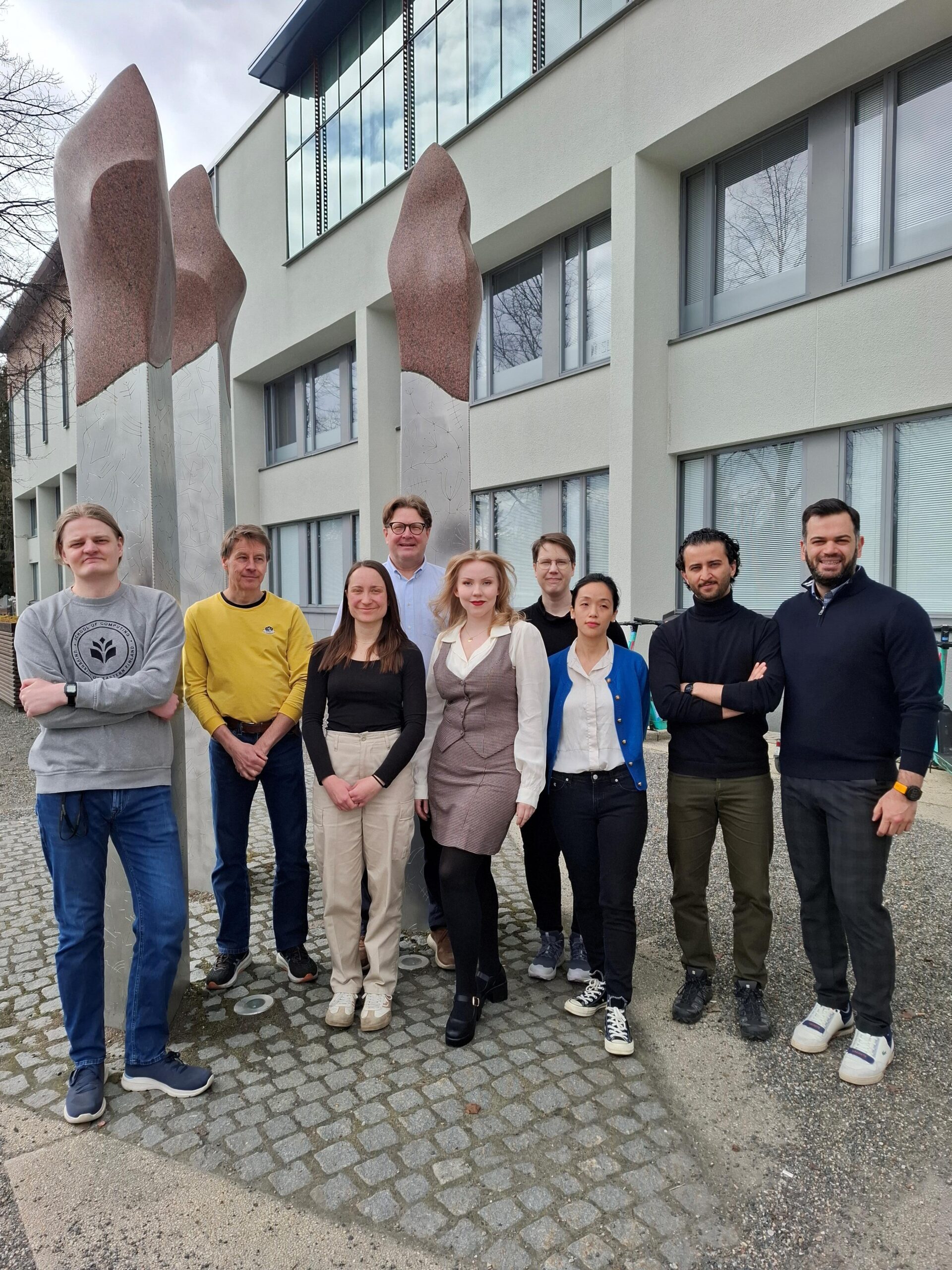
(from left to right) Juhani Järviö, Pasi Fränti, Rahel Albicker, Mikko Laitinen (PI), Irene Taipale, Paula Rautionaho, Chunyuan Nie, Mehrdad Salimi, Masoud Fatemi
This project, funded by the Research Council of Finland for 2024-28, focuses on studying how innovations spread in social networks. Social network theory predicts that innovations and new ideas spread most effectively through individuals who are loosely connected in networks. Numerous observations from a range of fields support this theory, but their evidence is mainly based on very small networks. This cross-disciplinary project tests the validity of the theory by examining how linguistic innovations spread in extremely large social media networks. The group brings together leading computational humanities experts, sociolinguists and computer scientists.
In addition to advancing basic research, this project leads to considerable societal impact, since the technical tools developed can be used to model the spread of disinformation in social media effectively.
News
-
 COMET researchers at the Methods XIX Conference
COMET researchers at the Methods XIX Conference
Three COMET project presentations will be given at the Methods XIX Conference in Vancouver, Canada this August. -
 COMET researchers win Best Paper Award
COMET researchers win Best Paper Award
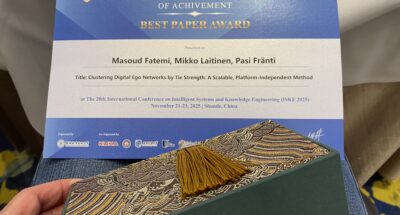
Masoud Fatemi, Mikko Laitinen and Pasi Fränti have been awarded the Best Paper prize at ISKE2025 conference in China! See below. -
Several COMET researchers at ISLE8
Several COMET researchers at ISLE8
Several COMET researchers will present their ongoing work at the 8th Conference of the International Society for the Linguistics of English (ISLE)… -
 COMET at ICAME47 in Koblenz
COMET at ICAME47 in Koblenz
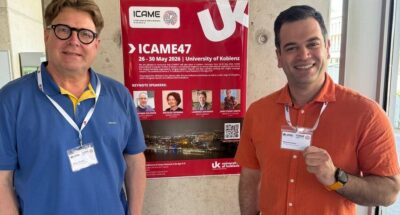
COMET project recently presented their work at ICAME 47, held at the University of Koblenz in May 2026. The full paper by Mikko Laitinen, Masoud…
Three COMET presentations at the Methods in Dialectology XIX conference
Mikko Laitinen, Masoud Fatemi, and Mehrdad Salimi present a method for tracing the structures of social media networks that can be applied to any social media platform. They also discuss the usefulness of a network perspective for linguistic research by examining how network structures affect the spread of recent lexical innovations.
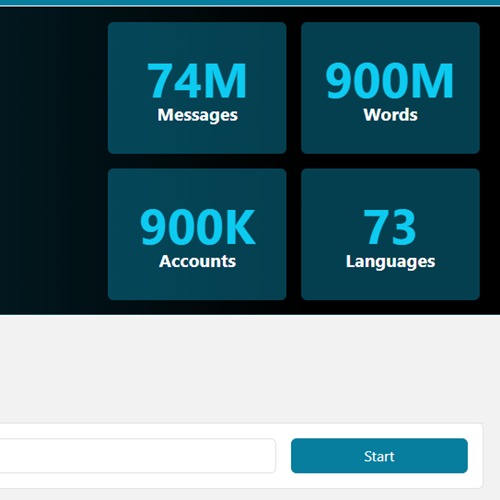
Salimi, Fatemi, and Laitinen introduce their massive Bluesky dataset that grows in real time through continuous data streaming. The dataset is among the largest and most versatile language datasets currently available, as it includes the posts of around nine million users together with all interactional ties between them, and it continues to grow by approximately 1.5 billion words every month.
Irene Taipale presents her research on linguistic Americanization and its possible countercurrents in data drawn from Finnish social media users in relation to the language use of their social networks. Taipale analyzes the forms kind of / kinda | sort of / sorta, and toward | towards, which reflect intriguing and partly opposing paths of change in English.
More information about the upcoming presentations can be found from the abstracts below. See you in Vancouver!
Laitinen_Fatemi_Salimi_abstract_Methods_XIX
COMET researchers win Best Paper Award
Masoud Fatemi, Mikko Laitinen and Pasi Fränti have been awarded the Best Paper prize at ISKE2025 conference in China! The title of the paper is “Clustering Digital Ego Networks by Tie Strength: A Scalable, Platform-independent Method”.
Abstract:
This study presents a scalable method to classify online social networks based on tie strength. Utilizing ego networks from Twitter, we applied four measurable features—interaction strength, relative interaction strength, social similarity, and outlier ratio—to cluster over 8,000 networks into four categories: weak, moderately-weak, moderately-strong, and strong ties. Our approach is not platform-dependent and overcomes the limitations of previous methods that relied on fixed thresholds or manual labeling. The results reveal regional and gender-based differences in tie strength patterns: Nordic users tend to form weaker ties, while users in Australia, the UK, and the US are more likely to build stronger-tie networks. Male users dominate across all tie categories, while female and uncategorized users are more common in weaker networks. The findings can support research in online social behavior, content delivery, and information diffusion.
COMET at ICAME47 in Koblenz
COMET project recently presented their work at ICAME 47, held at the University of Koblenz in May 2026. The full paper by Mikko Laitinen, Masoud Fatemi and Mehrdad Salimi introduced a new methodology for integrating interaction‑based social network information into large‑scale social media corpora, demonstrating how network structures can enrich research on lexical innovation. You can read more about the conference at ICAME47 –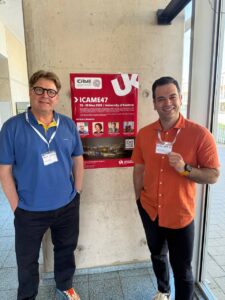 .
.
COMET researchers at CMC-Corpora 2026
Two COMET researchers presented their work at CMC-Corpora 2026 in Oulu, August 27–28.
Mikko Laitinen gave a keynote speech on ego networks in large social media corpora, presenting a method for measuring the strength of ego networks based on interactional data and network structures. The lecture exemplified how the methodology presented can be applied to trace lexical emergence in large digital social networks.
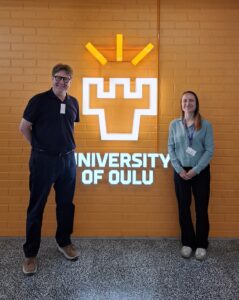
Rahel Albicker presented her ongoing work on pronoun declarations in large CMC networks, tracing the spread and behavior of the sociolinguistic innovation in light of the weak-tie hypothesis.
More information about the conference, including the conference proceedings, can be found at https://cmc2026.org/
Files
1 itemsKeywords
Leaders
Professors

Senior Researchers
Doctoral Researchers
-

Irene Taipale
Project ResearcherSchool of Humanities, Philosophical Faculty -

Rahel Albicker
Doctoral ResearcherSchool of Humanities, Philosophical Faculty -

Masoud Fatemi
Postdoctoral ResearcherSchool of Humanities, Philosophical Faculty -

Mehrdad Salimi
Project ResearcherSchool of Humanities, Philosophical Faculty
Publications
11 items-
Detecting Connectivity Patterns in Nordic Twittersphere by Cluster Analysis
Fatemi, Masoud; Sieranoja, Sami; Laitinen, Mikko; Fränti, Pasi, 2025, SN computer science, 6, 7, 815. A1 Journal article (refereed), original research -
Do we swear more with friends or with acquaintances? F#ck in social networks
Laitinen, Mikko; Rautionaho, Paula; Fatemi, Masoud; Halonen, Mikko, 2025, Lingua, 320, 103931. A1 Journal article (refereed), original research -
From tweets to networks: Introducing four large network-based social media corpora
Fatemi, Masoud; Laitinen, Mikko, 2025, CLARIN annual conference proceedings. Abstract -
Reuse of social media data in corpus linguistics
Laitinen, Mikko; Rautionaho, Paula, 2025, International journal of corpus linguistics, 30, 2, 171-194. A1 Journal article (refereed), original research -
Testing the weak-tie hypothesis with social media
Laitinen, Mikko; Fatemi, Masoud, 2024, Poudat, Céline; Guernut, Mathilde, Proceedings of the 11th Conference on computer-mediated communication and social media corpora, 46-51. D3 Professional conference proceedings -
Data-intensive sociolinguistics using social media
Laitinen, Mikko; Fatemi, Masoud, 2023, Annales Academiae Scientiarum Fennicae, 2023, 2, 38-61. A1 Journal article (refereed), original research -
Big and rich social networks in computational sociolinguistics
Laitinen, Mikko; Fatemi, Masoud, 2022, Rautionaho, Paula; Parviainen, Hanna; Kaunisto, Mark; Nurmi, Arja, Social and Regional Variation in World Englishes : Local and Global Perspectives, 166-190. A3 Book section, Chapters in research books -
Towards Visual Sociolinguistic Network Analysis
Kucher, Kostiantyn; Fatemi, Masoud; Laitinen, Mikko, 2021, Hurter, Christophe; Purchase, Helen; Braz, Jose; Bouatouch, Kadi, Proceedings of the 16th International Joint Conference on Computer Vision, Imaging and Computer Graphics Theory and Applications - IVAPP (Volume 3), 248-255. A4 Conference proceedings -
Size matters: Digital social networks and language change
Laitinen, Mikko; Fatemi, Masoud; Lundberg, Jonas, 2020, Frontiers in artificial intelligence and applications, 3, 46. A1 Journal article (refereed), original research -
The Nordic tweet stream: A dynamic real-Time monitor corpus of big and rich language data
Laitinen, Mikko; Lundberg, Jonas; Levin, Magnus; Martins, Rafael, 2018, Tolonen, M; Tuominen, J; Makela, E, 3rd Conference on Digital Humanities in the Nordic Countries, DHN 2018; Helsinki; Finland; 7 March 2018 through 9 March 2018, 349-362. A4 Conference proceedings