

ISKU – Eastern Finland Towards New Technology and Business with a CCUS Research and Technology Center
Funders

Leaders

Contact persons

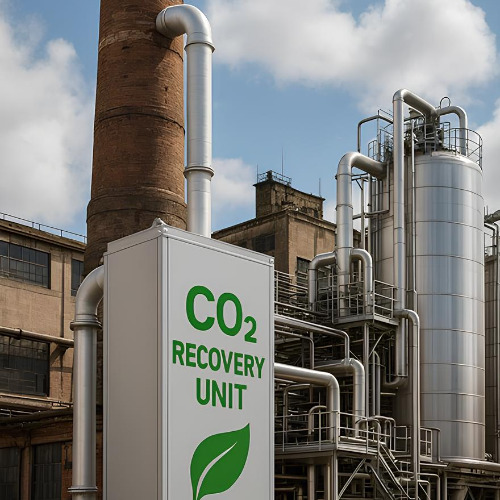
The ISKU Project brings together, for the first time, the key energy and bioeconomy experts in Eastern Finland to develop solutions for biogenic carbon dioxide capture and utilization (BECCUS/CCUS) and to create the conditions for their commercial deployment. The project focuses on regional biogenic CO₂ sources and their integration into new, high value‑added chemical and material applications.
The project will produce a comprehensive overview of the biogenic CO₂ potential in Eastern Finland, with an emphasis on the quantity, quality, and availability characteristics of CO₂. At the same time, it will assess the suitability of different CO₂ capture technologies for biogenic sources and examine the performance of a selected capture technology in a real operational environment in Eastern Finland. The ISKU project will also explore and demonstrate new types of high value‑added bio‑based applications, such as biochar‑based battery materials. In addition, the project will investigate alternative reaction pathways for converting biogenic CO₂ and green hydrogen into chemicals and materials that serve regional industry. Overall energy efficiency will be advanced by analysing the potential for utilizing waste heat from green hydrogen production, using municipalities and regional energy actors in Eastern Finland as case examples.
ISKU integrates the laboratory infrastructures and learning environments of the consortium partners into a single entity that serves Eastern Finland. This shared platform will be used not only for research, development, and innovation activities but also for educating future professionals through engineering degree programmes at universities of applied sciences and master’s programmes at universities. A key project outcome is the development of a vision, mission, and strategy for a joint Eastern Finland research and technology Centre dedicated to biogenic CO₂ capture and utilization. An associated regional business and competence network will also be established around this Centre.
As a result, Eastern Finland will strengthen its position as a hub for renewable energy, circular economy, and carbon‑neutral industrial development. The project will provide companies with a unique environment for developing, testing, and demonstrating industrial‑scale carbon capture and utilization solutions.
Keywords
Leaders
Professors
-

Anna Lähde
ProfessorDepartment of Environmental and Biological Sciences, Faculty of Science, Forestry and Technology -

Olli Sippula
ProfessorDepartment of Environmental and Biological Sciences, Faculty of Science, Forestry and Technology
Post-doctoral Researchers
Doctoral Researchers
Supporting Staff

Contact persons
Publications
8 items-
A comprehensive bibliometric analysis of research on health and environmental impacts of particle emissions from wood combustion in residential heating
Khedari, Marie; Villot, Audrey; Sippula, Olli; Jalava, Pasi; Andres, Yves, 2025, Environmental science and pollution research, 32, 30, 17897-17915. A2 Review article, Literature review, Systematic review -
Brown carbon emissions from laboratory combustion of Eurasian arctic-boreal and South African savanna biomass
Mukherjee, Arya; Hartikainen, Anni; Somero, Markus; Luostari, Viljami; Ihalainen, Mika; Rüger, Christopher P; Kekäläinen, Timo; Nissinen, Ville H.; Barreira, Luis MF; Koponen, Hanna; Kokkola, Tuukka; Li, Delun; Vettikkat, Lejish; Yli-Pirilä, Pasi; Shahzaib, Muhammad; Ruppel, Meri M; Vakkari, Ville; Jaars, Kerneels; Siebert, Stefan J; Buchholz, Angela; Köster, Kajar; van Zyl, Pieter G; Timonen, Hilkka; Kinnunen, Niko; Jänis, Janne; Virtanen, Annele; Virkkula, Aki; Sippula, Olli, 2025, Atmospheric chemistry and physics, 25, 22, 16747-16774. A1 Journal article (refereed), original research -
Comparison of thermal and chemical purification methods for graphite from spent lithium-ion batteries
Rantala, Venla; Kauppinen, Toni; Välikangas, Juho; Hu, Tao; Lähde, Anna; Tuomikoski, Sari; Lassi, Ulla, 2025, Separation and purification technology, 376, Part 2, 133992. A1 Journal article (refereed), original research -
Molten salt assisted synthesis of a lignin derived porous carbon host for lithium–sulfur battery cathodes
Jämsén, Juhana; Nevalainen, Pauliina; Murashko, Kirill; Lähde, Anna, 2025, Energy advances, 5, 1, 83-96. A1 Journal article (refereed), original research -
Silicon/carbon composite anode materials for lithium-ion batteries: materials design and synthesis, current state, progress, and future perspectives
Ahmed, Humna; dos Reis, Glaydson Simoes; Molaiyan, Palanivel; Lähde, Anna; Lassi, Ulla, 2025, Progress in energy, 7, 2, 022003. A2 Review article, Literature review, Systematic review -
Black carbon and particle lung-deposited surface area in residential wood combustion emissions: Effects of an electrostatic precipitator and photochemical aging
Mukherjee, A; Hartikainen, A; Joutsensaari, J; Basnet, S; Mesceriakovas, A; Ihalainen, M; Yli-Pirilä, P; Leskinen, J; Somero, M; Louhisalmi, J; Fang, Z; Kalberer, M; Rudich, Y; Tissari, J; Czech, H; Zimmermann, R; Sippula, O, 2024, Science of the total environment, 951, 175840. A1 Journal article (refereed), original research -
Contribution of brown carbon to light absorption in emissions of European residential biomass combustion appliances
Basnet, Satish; Hartikainen, Anni; Virkkula, Aki; Yli-Pirilä, Pasi; Kortelainen, Miika; Suhonen, Heikki; Kilpeläinen, Laura; Ihalainen, Mika; Väätäinen, Sampsa; Louhisalmi, Juho; Somero, Markus; Tissari, Jarkko; Jakobi, Gert; Zimmermann, Ralf; Kilpeläinen, Antti; Sippula, Olli, 2024, Atmospheric chemistry and physics, 24, 5, 3197-3215. A1 Journal article (refereed), original research -
Aerosol processing technique for the synthesis of mixed-phase copper on carbon catalyst: insights into CO2 adsorption and photocatalytic activity
Subedi, Nabin; Mesceriakovas, Arunas; Pham, Khai; Heponiemi, Anne; Karhunen, Tommi; Saarinen, Jarkko J; Lassi, Ulla; Lähde, Anna, 2022, Nanotechnology, 33, 49, 495601. A1 Journal article (refereed), original research