

Gene and Cell Technology
Leaders
Our research focuses on neural plasticity, the brain’s capacity to change and adapt in response to internal and external stimuli, and how this process is disrupted in neurological disorders, particularly Alzheimer’s disease. We are especially interested in parvalbumin (PV) interneurons, inhibitory nerve cells that help coordinate brain activity, and BDNF/TrkB signalling, a molecular pathway involved in learning and neural plasticity.
We develop and apply adeno-associated viral (AAV) vectors to deliver genetic tools to specific types of brain cells. These include optoTrkB, a light-activated version of the TrkB receptor that allows us to control molecular signals involved in neural plasticity. By combining these tools with calcium imaging, behavioural studies and molecular analyses, we investigate how neural circuits adapt during learning and how this capacity may be restored in disease.
We also explore advanced genetic and molecular tools, including genetically encoded antibody fragments known as single-chain variable fragments (scFvs). Future directions include CRISPR/dCas9-based gene regulation and optogenetic approaches targeting microglia, the brain’s immune cells. We also collaborate on CRISPR/Cas9 genome editing to develop genetically matched (isogenic) human stem-cell models of neurological disorders.
News
-
 Restoring the function of interneuron cells is being sought as a treatment for Alzheimer's disease
A research project focused on combating Alzheimer's disease has been awarded a 90,000 euro grant by the Jane and Aatos Erko Foundation. Led by docent… -
Study explains how antidepressant increases brain plasticity
Study explains how antidepressant increases brain plasticity
Researchers from the University of Helsinki and the University of Eastern Finland have conducted a recent study published in Neuropsychopharmacology,… -
 Antidepressant fluoxetine found to promote brain plasticity in key cells, reshaping their energy systems
A new study shows that the widely used antidepressant fluoxetine does more than boost serotonin levels: it changes how brain cells manage their energy…
Cooperation
Keywords
Leaders
Senior Researchers
Doctoral Researchers

Other group members
-
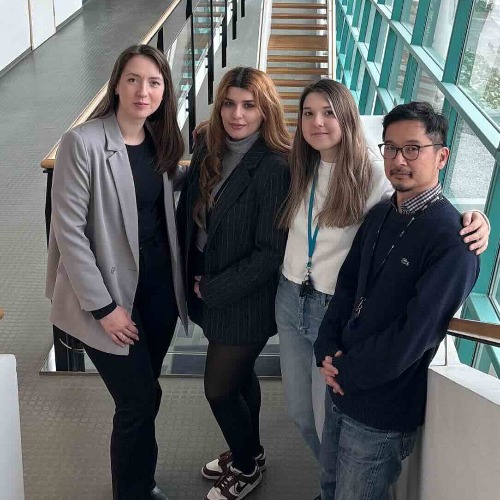
Mayuko Shimizu-Ichimura [email protected]
-
Lisa Rampazzo [email protected]
-
Akram Khoshnoudfar [email protected]