

Human Brain Disease Modelling (Lehtonen lab)
Leaders
Group overview
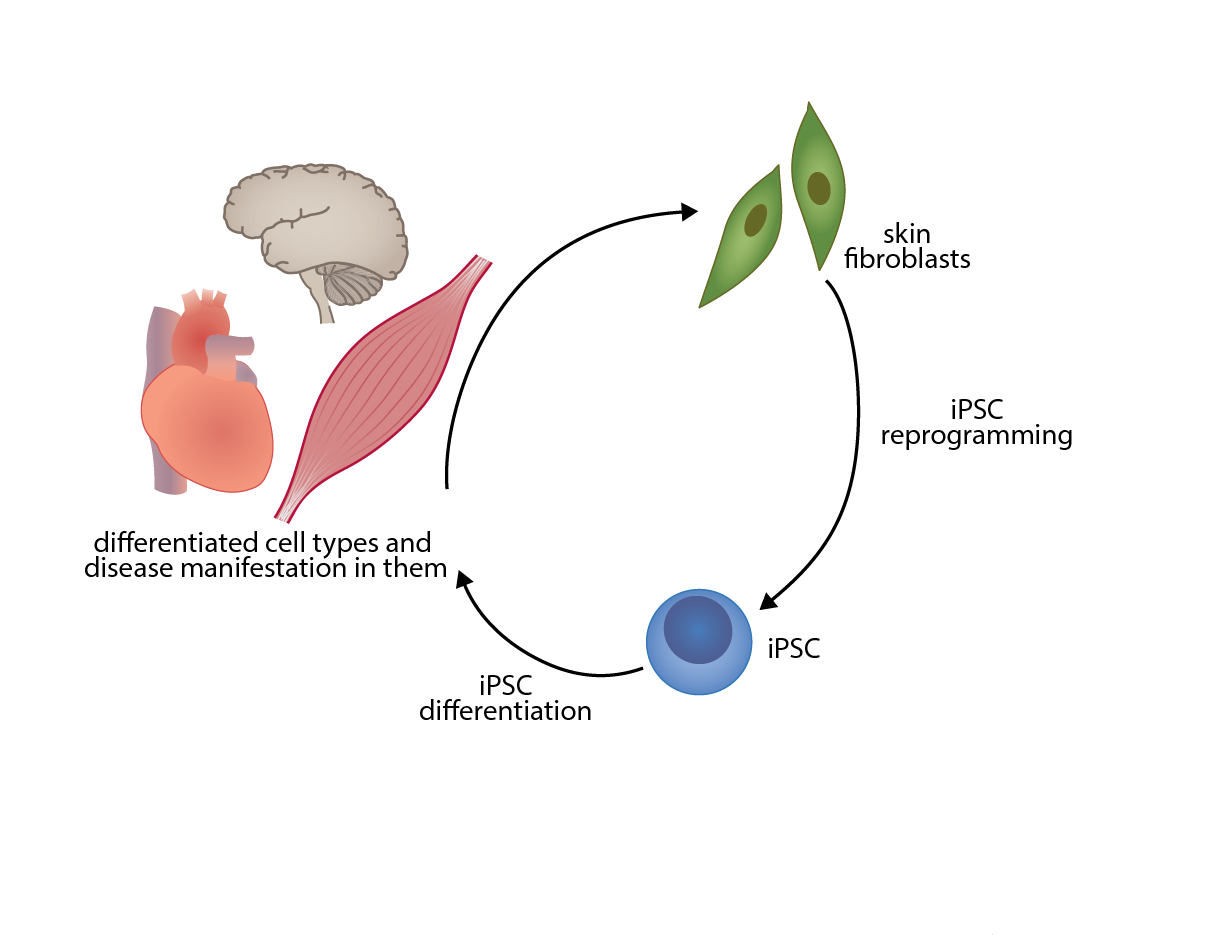
Parkinson’s disease (PD) is the fastest-growing neurodegenerative disorder worldwide and remains a major unmet medical need, as current treatments primarily target symptoms rather than the underlying disease mechanisms. Our research aims to address this challenge by combining mechanistic studies in advanced human-based models with analyses of surgical and postmortem human brain tissue, biosamples, and clinical data to improve translational relevance and identify novel therapeutic targets. We focus on three complementary areas: early mutation-driven disease mechanisms, using the rare SNCA A53E mutation to investigate disease initiation, alpha-synuclein pathology, and vulnerable cell types; body-first synucleinopathy, exploring the role of the gut-brain axis and peripheral pathology in disease onset and progression, with the aim of improving early diagnosis and identifying gut-targeted interventions; and progressive PD mechanisms, investigating synaptic dysfunction, vesicle trafficking, and glutamate signaling as drivers of disease progression and circuit dysfunction. By integrating patient-derived models, human organoids, advanced midbrain models, multi-omics, and human patient material, we aim to uncover disease mechanisms and develop more precise, stage-specific therapeutic strategies. We closely collaborate with clinical experts Henna-Kaisa Jyrkkänen (KYS), Filip Scheperjans (HUS), and Liisa Myllykangas (University of Helsinki) to connect experimental findings with patient-based research and clinical needs.
News
-
 Pioneering study reveals nanoplastics have potential to cross blood-brain barrier
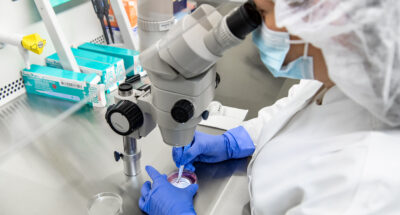
Pioneering study reveals nanoplastics have potential to cross blood-brain barrier
A new study published in Nano Today reveals that nanoplastics, which are tiny plastic particles less than one micrometer in size, may cross the… -
 YUFE Postdoctoral Programme’s appeal lies in career mentoring and collaboration possibilities
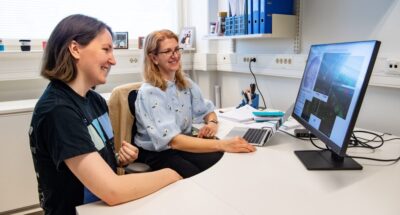
YUFE Postdoctoral Programme’s appeal lies in career mentoring and collaboration possibilities
Canadian-born researcher Katrina Räty found herself in Finland again – this time as a Postdoctoral Researcher at the University of Eastern Finland. -
 Sigrid Jusélius Foundation grant boosts brain disease modelling
Sigrid Jusélius Foundation grant boosts brain disease modelling
Sigrid Jusélius Foundation has granted a senior researcher post to Docent Šárka Lehtonen from the University of Eastern Finland. Her lab develops… -
 Projects on Parkinson’s disease and novel antibiotics secure significant funding
Projects on Parkinson’s disease and novel antibiotics secure significant funding
Jane and Aatos Erkko Foundation has granted significant funding to two research projects at the University of Eastern Finland. Docent Šárka Lehtonen…
Projects

Cooperation
-
 AIVI Stem Cell Center
 -
 Neuroinflammation research group 01.01.2017 -
 -
 Biomedical Informatics (Fortino's group) 01.02.2019 -
-
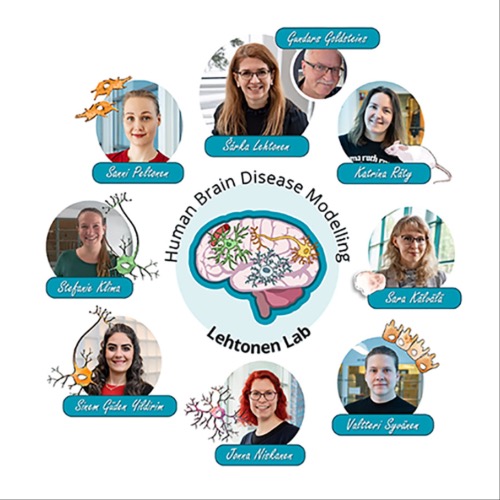
Šárka Lehtonen, Ph.D. in Pharmacology – I am a highly motivated, results-driven senior researcher and group leader with over 20 years of experience in in vitro and in vivo pharmacology and over 10 years in stem cell technology. I am very committed to exceeding goals and working with the team to develop novel human models for neurological diseases and drug development studies.
Katrina Räty (Albert), Ph.D. in Pharmacology, visiting researcher – I have expertise in models of Parkinson’s disease, with a focus on the main pathological protein: alpha-synuclein. I completed my PhD at the University of Helsinki and then went to the University of Cambridge to improve my knowledge of alpha-synuclein. Now that I am back in Finland, I am starting my own project in the Lehtonen lab, focusing on microglia and alpha-synuclein. My main interest is in making better preclinical models to find new treatments for disease. When I’m not thinking about alpha-synuclein you can find me trying new beers and brewing my own, or then attending concerts (just kidding – I’m thinking about alpha-synuclein those times too).
Sinem Yildirim (Guden), Ph.D. in Pharmacology, supported by a YUFE4 postdocsupported by a YUFE4 postdoc – I am particularly interested in neuroinflammation and neurodegeneration. In my current position as a postdoctoral researcher in the Lehtonen lab, I have been working on a project investigating how environmental micro- and nanoplastics affect the immune response in Parkinson’s disease. I seek to enhance my expertise in developing translatable, predictive human cellular models to address the urgent need for effective pharmaceuticals for neurodegenerative diseases.
Stefanie Klima, Ph.D. in Biological Sciences, supported by an MSCA NOVEL postdoc – I have expertise in stem cell-based in vitro models for neuroscience and disease modelling, with a focus on developing human-relevant models to uncover how diseases develop and progress. I am particularly interested in understanding the underlying mechanisms driving pathological changes at the cellular and molecular levels. In my project in the Lehtonen lab, I combine multi-omics approaches and in vitro models to reveal pathways and mechanisms altered in Parkinson’s disease.
Jonna Niskanen, M.Sc. in Molecular Medicine, PhD student – I am intrigued by our immune system – the body’s first line of defense – and the intercellular communications within. My previous projects have all been connected to cellular communications in one way or another. In my current position, I can combine cell signaling and immunology. I study iPSC-derived microglia and astrocytes in PD to see how these highly reactive glial cells affect neuronal wellbeing.
Sara Kälvälä, M.Sc. in Biomedicine – My research is focused on iPSC-derived midbrain organoids as a model system for PD. Next-generation human-based disease models could offer a more efficient and physiologically relevant alternative to animal models, bridging the gap between in vivo and in vitro. The brain is an immensely intricate organ with a wide variety of cell types functioning in perfect harmony – capturing a snapshot of that complexity in vitro is super exciting! I completed my Master’s thesis in the Lehtonen lab and am thrilled to continue working with the group. Outside the lab, I enjoy creative activities like drawing, photography, and sculpting. Also, a self-confessed podcast addict.
Sanni Peltonen, M.Sc. in Biomedicine – I’m working on projects related to the blood-brain barrier and microglia. I graduated from the University of Eastern Finland at the beginning of 2022, but have been working in the group since 2021. Before that, I completed my master’s thesis in the group. Currently, I am concentrating on blood-brain barrier modelling and glial cells. For me, it is important to develop more accurate human in vitro models for disease research and drug development, thereby offering better alternatives to in vivo models.
Valtteri Syvänen, M.Sc. in Pharmacy – I am currently working as a project researcher in the Human Brain Disease Modelling Group. When I finished my Master’s thesis in the Lehtonen lab, it was clear to me that I wanted to keep exploring the vast field of disease modelling. Neurodegenerative diseases have been a major focus of my studies, so it is exciting to continue this work as part of this group. I have experience in 3D and 2D culturing, and my current focus is on developing an in vitro gut-brain axis model to study gut changes in Parkinson’s disease.
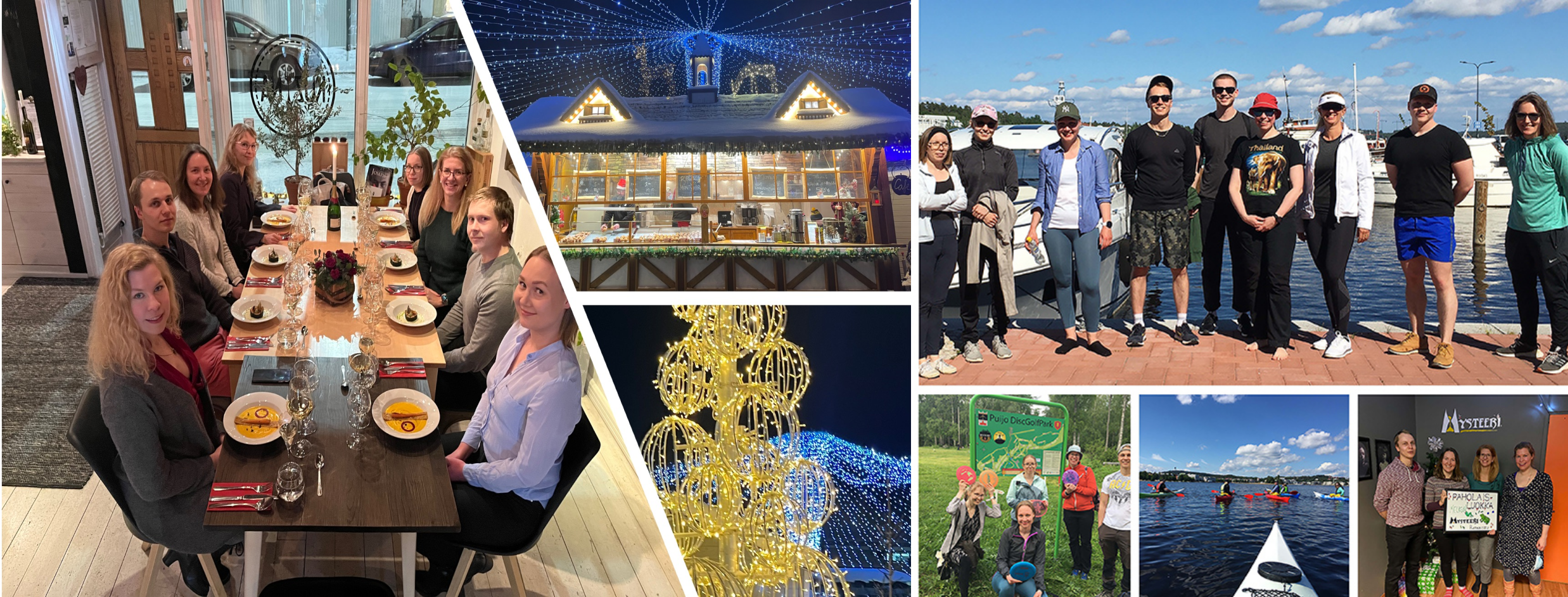
Keywords
Leaders
Post-doctoral Researchers
-
Katrina (Albert) Räty
Visiting ResearcherA.I. Virtanen Institute for Molecular Sciences, Faculty of Health Sciences -

Sinem Güden Yildirim
Postdoctoral ResearcherA.I. Virtanen Institute for Molecular Sciences, Faculty of Health Sciences -
Stefanie Klima
Postdoctoral ResearcherA.I. Virtanen Institute for Molecular Sciences, Faculty of Health Sciences
Doctoral Researchers
-

Jonna Niskanen
Grant-funded ResearcherA.I. Virtanen Institute for Molecular Sciences, Faculty of Health Sciences -

Sara Kälvälä
Doctoral ResearcherA.I. Virtanen Institute for Molecular Sciences, Faculty of Health Sciences -
Sanni Peltonen
Grant-funded ResearcherA.I. Virtanen Institute for Molecular Sciences, Faculty of Health Sciences -

Valtteri Syvänen
Doctoral ResearcherA.I. Virtanen Institute for Molecular Sciences, Faculty of Health Sciences
Publications
85 items-
APPswe mutation causes functional deficits in endothelial cells generated by transient ETV2 overexpression in human iPSCs
Wu, Ying-Chieh; Lehtonen, Šárka; Kauppinen, Riitta; Dhungana, Hiramani; Koistinaho, Jari; Rõlova, Taisia, 2025, Fluids and barriers of the cns, 22, 118. A1 Journal article (refereed), original research -
Activation of steroid hormone receptors by metabolism-disrupting chemicals
Pitkänen, Sini; Niskanen, Jonna; Mysore, Raghavendra; Niskanen, Einari A; Palvimo, Jorma J; Pijnenburg, Dirk; van Beuningen, Rinie; Rashidian, Azam; Kronenberger, Thales; Poso, Antti; Levonen, Anna-Liisa; Küblbeck, Jenni; Honkakoski, Paavo, 2025, Toxicology and applied pharmacology, 499, 117335. A1 Journal article (refereed), original research -
From inserts to chips: microfluidic culture and 3D astrocyte co-culture drive functional and transcriptomic changes in hiPSC-derived endothelial cells
Sonninen, Tuuli-Maria; Peltonen, Sanni; Kalvala, Sara; Nguyen, Hoang-Tuan; Ruponen, Marika; Singh, Prateek; Lehtonen, Sarka, 2025, Fluids and barriers of the cns, 22, 1, 58. A1 Journal article (refereed), original research -
From monolayers to microfluidics : uncovering how brain support cells contribute to Parkinson’s disease. Impact of LRRK2 mutation and microfluidic platform on endothelial cell and astrocyte function
Sonninen, Tuuli-Maria, 2025, Publications of the University of Eastern Finland. Dissertations in Health Sciences. G5 Doctoral dissertation (article) -
Human microglia reduce alpha-synuclein aggregation and are neuroprotective in adult mouse brain
Albert, Katrina; Peltonen, Sanni; Vanne, Anni; Kälvälä, Sara; Syvänen, Valtteri; Koistinaho, Jari; Luk, Kelvin C; Lehtonen, Šárka, 2025, Brain behavior and immunity, 130, 106097. A1 Journal article (refereed), original research -
Inflammation-induced lysosomal dysfunction in human iPSC-derived microglia is exacerbated by APOE 4/4 genotype
Hellén, Marianna; Weert, Isabelle; Müller, Stephan A.; Räsänen, Noora; Kettunen, Pinja; Lehtonen, Šárka; Peitz, Michael; Fließbach, Klaus; Takalo, Mari; Koskuvi, Marja; Lichtenthaler, Stefan F.; Leinonen, Ville; Ramirez, Alfredo; Kärkkäinen, Olli; Hiltunen, Mikko; Koistinaho, Jari; Rõlova, Taisia, 2025, Journal of neuroinflammation, 22, 1, 147. A1 Journal article (refereed), original research -
Kynurenic Acid and Promotion of Activity-Dependent Synapse Elimination in Schizophrenia
Orhan, Funda; Malwade, Susmita; Khanlarkhani, Neda; Gkogka, Asimenia; Langeder, Angelika; Jungholm, Oscar; Koskuvi, Marja; Lehtonen, Šárka; Schwieler, Lilly; Jardemark, Kent; Tiihonen, Jari; Koistinaho, Jari; Erhardt, Sophie; Engberg, Göran; Samudyata, Samudyata; Sellgren, Carl M, 2025, American journal of psychiatry, 182, 4, 389-400. A1 Journal article (refereed), original research -
Traffic-related diesel pollution particles impair the lysosomal functions of human iPSC-derived microglia
Ohtonen, Sohvi; Jäntti, Henna; Giudice, Luca; Mohamed, Ahmed; Shakirzyanova, Anastasia; Závodná, Táňa; Belevich, Ilya; Yan, Hong; Sabogal-Guáqueta, Angélica María; Saveleva, Liudmila; Väänänen, Mari-Anna; Rillo-Albert, Ashley; Perciballi, Elisa; Ferrari, Daniela; Tervo, Minna-Mari; Gómez-Budia, Mireia; Krejčík, Zdeněk; Aakko-Saksa, Päivi; Koistinaho, Jari; Lehtonen, Šárka; Kanninen, Katja M.; Topinka, Jan; Jokitalo, Eija; Sierra, Alejandra; Schmidt, Martina; Dolga, Amalia M.; Jalava, Pasi I.; Ko, 2025, Environment international, 199, 109467. A1 Journal article (refereed), original research -
miRNA profiling of hiPSC-derived neurons from monozygotic twins discordant for schizophrenia
Räsänen, Noora; Tiihonen, Jari; Koskuvi, Marja; Trontti, Kalevi; Cheng, Lesley; Hill, Andrew F; Lehtonen, Šárka; Vaurio, Olli; Ojansuu, Ilkka; Lähteenvuo, Markku; Pietiläinen, Olli; Koistinaho, Jari, 2025, Schizophrenia, 11, 1, 21. A1 Journal article (refereed), original research -
Astrocytes Regulate Neuronal Network Burst Frequency Through NMDA Receptors in a Species- and Donor-Specific Manner
Räsänen, Noora; Tiihonen, Jari; Koskuvi, Marja; Lehtonen, Šárka; Jalkanen, Nelli; Karmila, Nelli; Weert, Isabelle; Vaurio, Olli; Ojansuu, Ilkka; Lähteenvuo, Markku; Pietiläinen, Olli; Koistinaho, Jari, 2024, Biological psychiatry global open science, 4, 4, 100313. A1 Journal article (refereed), original research