SCIENTIFIC ARTICLES ON SEALS IN PEER-REVIEWED JOURNALS
The 2020s
Jakkila J., Auttila M., Tuukkanen T., Veijalainen N. 2024. Modelling climate change impacts on lake ice and snow demonstrates breeding habitat decline of the endangered Saimaa ringed seal. Climate Change, 177:134. DOI: https://doi.org/10.1007/s10584-024-03797-0
Nepovinnykh E., Vilkman A., Eerola T., Kälviäinen H. 2023. Re-identification of Saimaa Ringed Seals from Image Sequences. In: Gade, R., Felsberg, M., Kämäräinen, JK. (eds) Image Analysis. SCIA 2023. Lecture Notes in Computer Science, vol 13885. Springer, Cham. https://doi.org/10.1007/978-3-031-31435-3_8
Löytynoja A., Rastas P., Valtonen M., Kammonen J., Holm L., Olsen M.T., Paulin L., Jernvall J., Auvinen P. 2023. Fragmented habitat compensates for the adverse effects of genetic bottleneck. Current Biology 33:1009–1018. DOI: https://doi.org/10.1016/j.cub.2023.01.040
Chelak I., Nepovinnykh E., Eerola T., Kälviäinen H., Belykh I. 2023. EDEN: Deep Feature Distribution Pooling for Saimaa Ringed Seals Pattern Matching. In: Arseniev, D.G., Aouf, N. (eds) Cyber-Physical Systems and Control II. CPS&C 2021. Lecture Notes in Networks and Systems, vol 460. Springer, Cham. https://doi.org/10.1007/978-3-031-20875-1_13
Nepovinnykh, E., Eerola T., Kalviainen, H. 2020. Siamese Network Based Pelage Pattern Matching for Ringed Seal Re-identificationThe IEEE Winter Conference on Applications of Computer Vision (WACV) Workshops pp. 25-34. DOI: https://doi.org/10.1109/WACVW50321.2020.9096935
The 2010s
Savriama Y., Valtonen M., Kammonen J. I., Rastas P., Smolander O.-P., Lyyski A., Häkkinen T. J., Corfe I. J., Gerber S., Salazar-Ciudad I., Paulin L., Holm L., Löytynoja A., Auvinen P. & Jernvall J. 2018. Bracketing phenogenotypic limits of mammalian hybridization. Royal Society open science 5: 180903. DOI: https://doi.org/10.1098/rsos.180903
Shafer, A. B., Wolf, J. B., Alves, P. C., Bergström, L., Bruford, M. W., Brännström, I., … & Fawcett, K. D. 2015. Genomics and the challenging translation into conservation practice. Trends in Ecology & Evolution 30.2 : 78-87. DOI: https://doi.org/10.1016/j.tree.2014.11.009
Martinez-Bakker, M. E., Sell, S. K., Swanson, B. J., Kelly, B. P., & Tallmon, D. A. 2013. Combined genetic and telemetry data reveal high rates of gene flow, migration, and long-distance dispersal potential in Arctic ringed seals (Pusa hispida). PLoS One 8: e77125. DOI: https://doi.org/10.1371/journal.pone.0077125
Sainmaa, S. & Kunnasranta, M. 2010. Distemper viruses in seals – literature review. (In Finnish with English summary). Suomen Eläinlääkärilehti 116: 7-11.
The 2000s
Hyvärinen, H., Palviainen, A., Strandberg, U. & Holopainen, I.J. 2009. Aquatic Environment and Differentiation of Vibrissae: Comparison of Sinus Hair Systems of Ringed Seal, Otter and Pole Cat. Brain Behav Evol 74: 268-279. DOI: https://doi.org/10.1159/000264662
Strandberg, U., Käkelä, A, Lydersen C, Kovacs KM, Grahl-Nielsen O, Hyvärinen H. & Käkelä, M. 2008. Stratification, composition, and function of marine mammal blubber: the ecology of fatty acids in marine mammals. Physiol Biochem Zool. 81(4): 473-85. DOI: https://doi.org/10.1086/589108
Bell,S., Hampshire, K. & Tonder, M. 2008. Person, place, and knowledge in the conservation of the Saimaa ringed seal. Society and Natural Resources 21(4): 277-293. DOI: https://doi.org/10.1080/08941920701860516
Usenius, T., Mustonen, A.-M., Usenius, J.-P., Hyvärinen, H., Sipilä, T., Koskela, J. T. & Nieminen, P. 2007. Magnetic resonance imaging and its applications in morphological studies of pinnipeds. Ann. Zool. Fennici 44: 355–367. DOI: https://www.jstor.org/stable/23736928
Sinisalo, T., Poulin, R., Högmnader, H, Juuti, T. & Valtonen E.T. 2004. The impact of sexual selection on Corynosoma magdaleni (Acanthocephala) infrapopulations in Saimaa ringed seals (Phoca hispida saimensis). Parasitology 128: 179-185. DOI: https://doi.org/10.1017/S003118200300430X
Kostamo A, Hyvärinen H, Pellinen J. & Kukkonen JVK. 2002. Organochlorine concentrations in the Saimaa ringed seal (Phoca hispida saimensis) from Lake Haukivesi, Finland, in 1981-2000 and in its diet today. Environ. Toxicol. Chem. 21 (7), 1368-1376. DOI: https://doi.org/10.1002/etc.5620210706
Käkelä, A., Käkelä, R. & Hyvärinen, H. 2002. Analysis of hepatic vitamins A1, A2, their fatty acyl esters, and vitamin E for biomonitoring mammals feeding on freshwater fish. Environmental Toxicology and Chemistry 21: 390-396. DOI: https://doi.org/10.1002/etc.5620210223
Palo, J.U., Hyvärinen, H., Helle, E., Mäkinen, H.S. & Väinölä, R. 2002. Postglacial loss of microsatellite variation in the landlocked Lake Saimaa ringed seal. Conservation Genetics 4: 117-128. DOI: https://doi.org/10.1023/A:1023303109701
Kostamo A, Viljanen M, Pellinen J. & Kukkonen J. 2000. EOX and organochlorine compounds in fish and ringed seal samples from Lake Ladoga, Russia. Chemosphere 41, 1733-1740. DOI: https://doi.org/10.1016/S0045-6535(00)00048-5
Kostamo A, Medvedev N, Pellinen J, Hyvärinen H & Kukkonen JVK. 2000. Analysis of organochlorine compounds and extractable organic halogen in three subspecies of ringed seal from northeast Europe. Environ. Toxicol. Chem. 19 (4), 848-854. DOI: https://doi.org/10.1002/etc.5620190410
The 1990s
Kokko, H., Helle, E., Lindström, J., Ranta, E., Sipilä, T. & Courchamp, F. 1999. Backcasting population sizes of ringed and grey seals in the Baltic and Lake Saimaa during the 20th century. Ann. Zool. Fenn. 36: 65-73. DOI: https://www.jstor.org/stable/23735736
Kokko, H., Lindström, J., Ranta, E., Sipilä, T. & Koskela, J. 1998. Estimating the demographic effective population size of the Saimaa ringed seal (Phoca hispida saimensis Nordq.). Anim. Cons. 1: 47-54. DOI: https://doi.org/10.1111/j.1469-1795.1998.tb00225.x
Käkelä, R. & Hyvärinen, H. 1998. Composition of polyunsaturated fatty acids in the liver of freshwater and marine ringed seals (Phoca hispida ssp.) differs largely due to the diet of the seals. Comparative Biochemistry & Physiology – B: Comparative Biochemistry B 120: 231-237. DOI: https://doi.org/10.1016/S0305-0491(98)10012-3
Käkelä, R. & Hyvärinen, H. 1997. Fatty acid compositions and vitamin A and E status of endangered freshwater ringed seals (from Finland and Western Russia) differ from those of marine seals. Recent Res.Devel.in Lipids Res. 1: 1-7.
Käkelä, R., Hyvärinen, H. & Käkelä, A. 1997. Vitamins A1 (Retinol), A2 (3,4-Didehydroretinol) and E (ƒ¿-Tocopherol) in the liver and blubber of lacustrine and marine ringed seals. Comp. Biochem. Physiol. 116B: 27- 33. DOI:https://doi.org/10.1016/S0305-0491(96)00158-7
Medvedev, N., Panichev, N. & Hyvärinen, H. 1997. Levels of heavy metals in seals of Lake Ladoga and the White Sea. Sci. Total Environ. 206: 95-105. DOI: https://doi.org/10.1016/S0048-9697(97)80001-0
Ranta, E., Lindström, J. & Kokko, H. 1996. Ecological risk analysis: the case of the Saimaa ringed seal. Ambio 25: 363-365. DOI: https://www.jstor.org/stable/4314492
Sipilä, T., Medvedev, N. V. & Hyvärinen, H. 1996. The Ladoga seal (Phoca hispida ladogensis Nordq.). Hydrobiologia 322: 193-198. DOI: https://doi.org/10.1007/978-94-009-1655-5_30
Käkelä, R. & Hyvärinen, H. 1996. Site-specific fatty acid composition in adipose tissues of several northern aquatic and terrestrial mammals. Comparative Biochemistry and Physiology 115B: 501-514. DOI: https://doi.org/10.1016/S0305-0491(96)00150-2
Koistinen, J., Paasivirta, J., Suonperä, M. & Hyvarinen H. 1995. Contamination of pike and sediment from the Kymijoki river by PCDs, PCDDs, and PCDFs: Contents and patterns compared to pike and sediment from the Bothnian Bay and seasl from Lake Saimaa. Environn. Sci. Technol. 29 (10): 2541-2547. DOI:
https://doi.org/10.1021/es00010a013
Käkelä, R., Ackman, R. G. & Hyvärinen, H. 1995. Very long chain polyunsaturated fatty acids in the blubber of ringed seals (Phoca hispida sp.) from Lake Saimaa, Lake Ladoga, the Baltic Sea and Spitsbergen. Lipids 30: 725-731. DOI: https://doi.org/10.1007/BF02537799
Käkelä, R. & Hyvärinen, H. 1993. Fatty acid composition of fats around the mystacial and superciliary vibrissae differs from that of blubber in the Saimaa ringed seal (Phoca hispida saimensis). Comparative Biochemistry and Physiology 105B: 547-552. DOI: https://doi.org/10.1016/0305-0491(93)90087-l
Käkelä, R., Hyvärinen, H. & Vainiotalo, P. 1993. Fatty acid composition in liver and blubber of the Saimaa ringed seal (Phoca hispida saimensis) compared with that of the ringed seal (Phoca hispida Botnica) and grey seal (Halichoerus grypus) from the Baltic. Comparative Biochemistry and Physiology 105B: 553-565. DOI: https://doi.org/10.1016/0305-0491(93)90088-M
Hyvärinen, H. & Nieminen, M. 1990. Differentiation of the ringed seal in the Baltic Sea, Lake Ladoga and Lake Saimaa. Finnish Game Research 47: 21-27.
Sipilä, T. 1990. Lair structure and breeding habitat of the Saimaa ringed seal (Phoca hispida saimensis Nordq.) in Finland. Finnish Game Res. 47: 11-20.
Sipilä, T., Helle, E. & Hyvärinen, H. 1990. Distribution, population size and reproductivity of the Saimaa ringed seal (Phoca hispida saimensis Nordq.) in Finland, 1980-84. Finnish Game Res. 47: 3-10.
the 1980s
Hyvärinen, H. 1989. Diving in darkness: whiskers as sense organs of the ringed seal (Phoca hispida saimensis). J. Zool. (Lond.) 218: 663-678. DOI: https://doi.org/10.1111/j.1469-7998.1989.tb05008.x
Valtonen, E.T. & Helle, E. 1988. Host-parasite relationships between two seal populations and two species of Corynosoma (Acanthocephala) in Finland. J. Zool. 214: 361-371. DOI: https://doi.org/10.1111/j.1469-7998.1988.tb04729.x
Helle, E., Hyvärinen, H. & Stenman, O. 1985. PCB and DDT levels in the Baltic and Saimaa seal populations. Finnish Game Res. 44: 63-68.
Hyvärinen, H. & Sipilä, T. 1984. Heavy metals and high pup mortality in the Saimaa ringed seal population in Eastern Finland. Mar. Pollut. Bull. 15: 335-337. DOI: https://doi.org/10.1016/0025-326X(84)90490-9
Helle, E., Hyvärinen, H. & Sipilä, T. 1984. Breeding habitat and lair structure of the Saimaa ringed seal Phoca hispida saimensis Nordq. in Finland. Acta Zool. Fenn. 172: 125-127.
Hyvärinen, H. & Katajisto, H. 1984. Functional structure of the vibrissae of the ringed seal (Phoca hispida Schr.). Acta Zool. Fenn. 171: 27-30.
Helle, E., Hyvärinen, H., Pyysalo, H. & Wickström, K. 1983. Levels of organochlorine compounds in an inland seal population in Eastern Finland. Marine Pollution Bulletin 14: 256-260. DOI: https://doi.org/10.1016/0025-326X(83)90168-6
Kari, T. & Kauranen, P. 1978. Mercury and selenium contents of seals from fresh and brackish water in Finland. Bull. Envir. Contam. Toxic. 18: 273- 280. DOI: https://doi.org/10.1007/BF01685798
Karppanen, E. & Henrikson, K. 1974. Kvicksilver- occh klorerade kolvätehalter I havs- och insjösälär. Suomen Eläinlääkärilehti.
Helminen, M., Karppanen, E. & Koivisto, I. 1969. Saimaan norpan elohopeapitoisuudesta 1967. Suomen Eläinlääkärilehti 74: 87-89.
Hendrikson, K, Karppanen, E. & Helminen, M. 1969. Mercury in inland and marine seals. Nordisk hygienisk tidskrift 50: 54-59.
REPORTS AND GENERAL WORKS
Sainmaa, S., Auttila, M., Niemi, M. 2023. The seal project – How conservationists are working together to save the Saimaa ringed seal in a changing environment. Zooquaria 119:24.
Auttila, M., Heikkilä, P., Koskela, J., Kunnasranta, M., Marttinen, I., Niemi, M., Tiilikainen, R. & Sipilä, T. 2016. Uudet menetelmät tehostavat saimaannorpan suojelua ja kannanseurantaa muuttuvassa ilmastossa. Metsähallituksen luonnonsuojelujulkaisuja. Sarja A 223.
Kunnasranta, M., Levänen, R., Auttila, M. Niemi, M. & Markku Viljanen. 2014. Toimintasuunnitelma – Saimaannorpan pesintäolosuhteiden ennallistaminen muuttuvassa ilmastossa. WWF Suomen raportteja 31.
Nordström, M., Högmander, J., Halkka, A., Keränen, S., Kunnasranta, M., Nummelin, J., Miettinen, M., Niinimäki, T. & Tolvanen, P. 2011: Itämerennorppa Saaristomerellä – unohdettu uhanalainen. – Maailman luonnon säätiön WWF Suomen rahaston raportteja 28.
Auttila, M., Niemi, M. & Kunnasranta, M. 2010: Forskning som grund för skyddet av saimenvikaren. Fiskeritidskrift 4: 22-23.
Taskinen, J. (Ohjaus & käsikirjoitus) & M. Kunnasranta (käsikirjoitus) 2010: Dokumenttielokuva: Jäätä rakastavat / Ice-loving seals, 53 min., YLE.
Kunnasranta, M. 2007: Jään ja lumen seuralainen. Saimaan Luonto 2007-2008: 8-9.
Kunnasranta, M. 2007: Valtaosa itämerennorpista elää Perämerellä. Hailuodon luonto 6:24-25.
Kunnasranta, M. 2005: Sulevi – Pyhäselän viimeinen? Norpat katoavat pohjoiselta Saimaalta. Pohjois-Karjalan Luonto 21: 2-3.
Hyvärinen, H., Kunnasranta, M., Nieminen, P. & Taskinen, J. 2004: Hyle – Saimaan oma norppa. Tammi 145 s.
Hyvärinen, H., Sipilä, T., Koskela, J. & Kunnasranta, M. 1999: Saimaannorppa. Teoksessa: Kuusisto, E. (toim.) Elävä Saimaa: 126-136. Tammi.
Hyvärinen, H., Sipilä, T., Koskela, J. & Kunnasranta, M. 1999: The Saimaa ringed seal. Teoksessa: Kuusisto, E. (toim.), Saimaa a living lake: 126- 136. Tammi.
Sipilä, T. & Hyvärinen, H. 1998: Status and biology of Saimaa (Phoca hispida saimensis) and Ladoga (Phoca hispida ladogensis) ringed seals. Teoksessa: Heide- Jorgensen, M. P. & Lydersen, C. (toim.), Ringed seals in the north Atlantic: 83-99. The North Atlantic Marine Mammal Commission (NAMMCO) Scientific Publications, No 1.
Hyvärinen, H. 1995: Structure and function of the vibrissae of the ringed seal (Phoca hispida L.). Teoksessa: Kastelein R.A., Thomas J.A. and Nachtigall P.E., (toim.), Sensory Systems of Aquatic Mammals: 431-447. De Spiel Publishers. Woerden.
Hyvärinen, H. & Sipilä, T. 1992: Saimaannorppa Phoca (Pusa) hispida saimensis. Teoksessa: Elo, U. (toim.), Maailman uhanalaiset eläimet: 68-71. Weilin & Göös.
Sipilä, T. & Kurlin, K. 1992: Infared videothermography as a method for locating the undersnow lairs of the ringed seal. Teoksessa: Priede, I.G. & Swift, S.M. (toim.), Wildlife telemetry. Remote monitoring and tracking of animals: 35-40. Ellis Horwood Ltd. New York.
Sipilä, T. 1991: Saimaanhyljealueiden suojelutavoitteet. Maailman Luonnon Säätiön WWF Suomen Rahaston Raportteja, No 5. 82 s.
Becker, P. (toim.) 1984: Saimaannorppa. Suomen Luonnonsuojelun Tuki Oy. 136 s.
DOCTORAL DISSERTATIONS
Liukkonen, L. 2020: Linking spatial ecology to conservation of the endangered Saimaa ringed seal. PhD Thesis, University of Eastern Finland.
Koivuniemi, M. 2019: Monitoring the endangered Saimaa ringed seal in a changing climate. PhD thesis, University of Eastern Finland.
Oksanen, S. 2015: Spatial ecology of the grey seal and ringed seal in the Baltic Sea – seeking solutions to the coexistence of seals and fisheries. PhD thesis, University of Eastern Finland.
Auttila, M. 2015: The endangered Saimaa ringed seal in a changing climate – challenges for conservation and monitoring. PhD thesis, University of Eastern Finland.
Valtonen, M. 2014: Conservation genetics of the Saimaa ringed seal: insights into the history of a critically endangered population. PhD thesis, University of Eastern Finland.
Niemi, M. 2013: Behavioural ecology of the Saimaa ringed seal – implications for conservation. PhD-thesis, University of Eastern Finland.
Strandberg, U. 2012: Detailed stratification patterns and vertical layering of lipids in seal blubber – source of ecophysiological information. PhD-thesis, University of Eastern Finland.
Tonder, M. 2005: Anatomy of an Environmental Conflict- A Case Study of the Conservation of the Saimaa Ringed Seal. PhD-thesis, University of Joensuu.
Palo, J. 2003: Genetic diversity and phylogeography of landlocked seals. PhD-thesis, University of Helsinki.
Sipilä, T. 2003: Conservation Biology of Saimaa ringed seal (Phoca hispida saimensis) with reference to other European seal populations. PhD-thesis, University of Helsinki.
Kunnasranta, M. 2001: Behavioural biology of two ringed seal (Phoca hispida) subspecies in the large European lakes Saimaa and Ladoga. PhD-thesis, University of Joensuu.
Moisseinen, E. 1997: Contingen valuation. The case of the Saimaa seal. PhD-thesis, University of Joensuu.
Käkelä, R. 1996: Fatty acid compositions in subspecies of ringed seal (Phoca hispida) and several semiaquatic mammals: site-specific and dietary differences. PhD-thesis, University of Joensuu.
LICENTIATE THESES
Kostamo, A. 2004: Orgaaniset klooriyhdisteet saimaan-, laatokan- ja jäämerennorpissa. Lisensiaatintutkimus. Joensuun yliopisto.
Moisseinen, E. 1992: Norpan suojelun taloustieteellinen tarkastelu. Lisensiaatintutkimus, Joensuun yliopisto.
Sipilä, T. 1992: Saimaannorpan (Phoca hispida saimensis Nordq.) pesintä-, populaatio- ja suojelubiologiasta. Lisensiaatintutkimus, Joensuun yliopisto.
MASTER’S THESES
The 2020s
Hänninen, M. 2023. Saimaannorppapolitiikka 1907-1955: Hyljesodan kohteesta rauhoitetuksi eläimeksi. Pro gradu tutkielma, Itä-Suomen yliopisto.
Kurki, T. 2020. Sexual dimorphism and growth in the skulls of Saimaa ringed seal (Pusa hispida saimensis) – A 3D geometric morphometric approach. Pro gradu tutkielma, Itä-Suomen yliopisto.
Niskanen, K. 2020. Saimaannorppien (Pusa hispida saimensis) elinpiirit ja makuupaikat Saimaan Pihlajavedellä. Pro gradu tutkielma, Itä-Suomen yliopisto.
Lushpanov, A. 2020. Instance segmentation of Ladoga ringed seals. Diplomityö. LUT university.
Zavialkin, D. 2020. CNN-based ringed seal pelage pattern extraction. Diplomityö. LUT university.
The 2010s
Nihtilä, H. 2019. Hylkeiden osmoottinen säätely ja saimaannorpan (Pusa hispida saimensis) munuaisten anatomia. Pro gradu tutkielma, Helsingin yliopisto.
Mutka, P. 2019. Pihlajaveden saimaannorppien (Pusa hispida saimensis) sosiaalinen verkosto. Pro gradu tutkielma, Itä-Suomen yliopisto.
Mettinen, M. 2018. Saimaannorpan karvanvaihdon ajoittuminen. Pro gradu -tutkielma, Itä-Suomen yliopisto.
Miettinen, M. 2018. Saimaannorpan sosiaaliset verkostot Haukivedellä. Pro gradu -tutkielma, Itä-Suomen yliopisto.
Korhonen, S. 2017: Talviaikaiset häiriötekijät saimaannorpan (Phoca hispida saimensis) pesintäympäristössä. Pro gradu -tutkielma, Itä-Suomen yliopisto.
Nepovinnykh, E. 2017: Saimaa ringed seal fur pattern extraction for identification purposes. Diplomityö, Lappeenrannan teknillinen yliopisto.
Kosyanenko, E. 2017: Convolutional neural networks for Saimaa ringed seal segmentation. Diplomityö, Lappeenrannan teknillinen yliopisto.
Popova, A. 2017: Co-segmentation methods for wildlife-photo identification. Diplomityö, Lappeenrannan teknillinen yliopisto.
Zhelezniakov, A. 2015: Automatic image-based identification of Saimaa ringed seals. Diplomityö, Lappeenrannan teknillinen yliopisto.
Kauppinen, P. 2014: Itämerennorppanaaraiden (Phoca hispida botnica) liikkuminen ja elinympäristön käyttö. Pro gradu -tutkielma, Itä-Suomen yliopisto.
Kettunen, J. 2014: Saimaannorpan elinpiirin mallinnus, Pro gradu -tutkielma, Itä-Suomen yliopisto.
Tiainen, H. 2014: Itämerennorpan (Phoca hispida botnica) elinpiirin koko ja liikkuminen. Pro gradu -tutkielma, Itä-Suomen yliopisto.
Buuri, H. 2013: Saimaannorppanaaraiden (Phoca hispida saimensis) yksilöntunnistus ja pesäpaikkauskollisuuden selvittäminen geneettisin menetelmin pesäpaikoilta kerätyistä istukkanäytteistä. Pro gradu -tutkielma, Oulun yliopisto.
Liukkonen, L. 2013: Saimaannorpan (Phoca hispida saimensis) elinpiirien ajallinen vaihtelu ja seurantamenetelmät. Pro gradu -tutkielma, Itä-Suomen yliopisto.
Pätynen, J. 2013: Saimaannorpan (Pusa hispida saimensis) raskasmetallikuormitus 2000-luvulla. Pro gradu -tutkielma, Itä-Suomen yliopisto.
Virkkunen, H. 2013: PCB-yhdisteet saimaannorpan (Pusa hispida saimensis) traanikudoksessa: nykytilanteen määrittely ja uusien analyysimenetelmien kehittäminen. Pro gradu -tutkielma, Itä-Suomen yliopisto.
Nakari, A.-M. 2013: Saimaannorpan (Phoca hispida saimensis) ravinnonkäyttö 2000-luvulla. Pro gradu -tutkielma, Itä-Suomen yliopisto.
Levänen, R. 2013: Saimaannorpan (Phoca hispida saimensis) pesintä apukinoksissa ja poikaspesien vedenalainen ympäristö. Pro gradu -tutkielma, Itä-Suomen yliopisto.
Koivuniemi, M. 2012: Photo-ID saimaannorpalla (Phoca hispida saimensis). Pro gradu -tutkielma, Itä-Suomen yliopisto.
Saarto, J. 2011: GPS-GSM-laitteen sovellutukset saimaannorppatutkimuksessa. Pro gradu -tutkielma, Itä-Suomen yliopisto.
Ahola, R. 2010: Fortum-katiskatempauksiin Saimaalla vuosina 2008 ja 2009 osallistuneiden kalastajien saimaannorpan suojelukulttuuri. Pro gradu-tutkielma, Itä-Suomen yliopisto.
Oksanen, S.M. 2010: Home range and movements of the Saimaa ringed seal (Phoca hispida saimensis Nordq.). Pro gradu-tutkielma, Jyväskylän yliopisto.
The 2000s
Margaritis, M. 2009: Saimaannorppakuuttien (Phoca hispida saimensis) levittäytyminen ja elinympäristön käyttö. Pro gradu-tutkielma, Joensuun yliopisto.
Paavilainen, P. 2007: Ihmistoiminnan vaikutus saimaannorpan (Phoca hispida saimensis) käyttäytymiseen. Pro gradu-tutkielma, Helsingin yliopisto.
Toivanen, M. 2007: Saimaannorpan (Phoca hispida saimensis) kasvu. Pro gradu-tutkielma, Joensuun yliopisto.
Laita, S. 2005: Saimaannorppa kunnan suunnittelussa. Pro gradu-tutkielma, Helsingin yliopisto.
Nisula, R. 2004: Vedenkorkeuden vaihtelun ja lumen määrän vaikutus saimaannorpan (Phoca hispida saimensis) pesintään. Pro gradu-tutkielma, Joensuun yliopisto.
Rautio, A. 2004: Saimaannorpan (Phoca hispida saimensis) jäänalainen ääntely ja käyttäytyminen pesintäaikaan. Pro gradu-tutkielma, Joensuun yliopisto.
Huovinen, L. 2003: Talviaikaisten vedenkorkeuden vaihtelujen vaikutukset saimaannorpan (Phoca hispida saimensis) pesäpoikaskuolleisuuteen ja vieroituskuolleisuuteen ja pesäkuolleiden poikasten painoon. Pro gradu-tutkielma, Joensuun yliopisto.
Kokko, S. 2003: Saimaan Pihlajaveden paikallisten asukkaiden ja vapaa-ajan asukkaiden asenne saimaannorppaan (Phoca hispida saimensis) sekä heidän käsityksiään saimaannorppien mahdollisesti aiheuttamista kalastusvahingoista. Pro gradu-tutkielma, Joensuun yliopisto.
Kolehmainen, P. 2001: Norpan (Phoca hispida) perinnöllisen muuntelun arviointi RAPD-menetelmällä. Pro gradu-tutkielma, Joensuun yliopisto.
The 1990s
Huttu, P-L. 1999: Saimaan- ja itämerennorpan eri sukupuolten aivojen suhteellinen koko ja biologinen älykkyys. Pro gradu-tutkielma, Joensuun yliopisto.
Tonder, M. 1999: Ympäristöasenteet ja niiden muutos Euroopan Unioniin integroituvassa Suomessa: tarkastelun kohteena Natura 2000 -verkoston norppakunnat. Pro gradu-tutkielma, Joensuun yliopisto.
Häkkinen, J. 1998: Saimaannorpan (Phoca hispida saimensis Nordq.) kesäaikainen sukelluskäyttäytyminen. Pro gradu-tutkielma, Joensuun yliopisto.
Pelkonen, P. 1998: Peruskoulun kuudesluokkalaisten käsityksiä saimaannorpasta uhanalaisena eläimenä. Pro gradu-tutkielma, Joensuun yliopisto.
Palviainen, A. 1996: Norpan (Phoca hispida) viiksikarvan aistielinten toiminta. Pro gradu-tutkielma, Joensuun yliopisto.
Kunnasranta, M. 1993: Saimaannorpan (Phoca hispida saimensis Nordq.) siirto osapopulaatiosta toiseen ja sukellusrytmiikka luonnonolosuhteissa. Pro gradu-tutkielma, Joensuun yliopisto.
Hämäläinen, E. 1991: Saimaanhylkeen (Phoca hispida saimensis) kesäinen sukellus- ja vuorokausirytmiikka sekä liikkuminen, etologinen tutkimus telemetrialla. Pro gradu-tutkielma, Joensuun yliopisto.
Määttänen, K. 1991: Saimaan, Itämeren- ja Laatokannorppien aivojen suhteellinen koko ja biologinen älykkyys. Pro gradu-tutkielma, Joensuun yliopisto.
Hintsanen, K. 1990: Norpan kallojen epäsymmetria ympäristön likaantumisen tai häiriöstressin mittana. Pro gradu-tutkielma, Joensuun yliopisto.
The 1980s
Miinin, H. 1985: Hylkeen (Phoca hispida Schr.) viiksikarvan toiminnallisesta rakenteesta. Pro gradu-tutkielma, Joensuun yliopisto.
Holopainen, T. 1984: Verenkierron erikoistumat saimaannorpan kuonon ja vatsan ihossa ja piisamin kuonon ja hännän ihossa sekä niiden merkitys lämmönsäätelyn kannalta. Pro gradu-tutkielma, Joensuun yliopisto.
Sipilä, T. 1983: Saimaanhyljetutkimus, tutkimusraportti 1981-1982. Pro gradu-tutkielma, Joensuun Yliopisto.


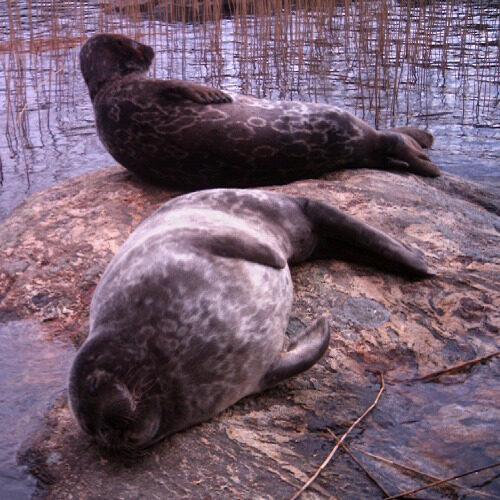
 Understanding ecology of ringed seals to enhance sustainable management in a changing environment (SealHabitat) 01.08.2025 - 31.07.2028
 Working together to save the Saimaa Ringed Seal in changing environment Finished 01.09.2020 - 31.12.2025
 Towards sustainable coexistence of seals and humans (CoExist) Finished 01.04.2019 - 31.03.2022
 Safeguarding the Saimaa Ringed Seal Finished 01.08.2013 - 31.12.2018