

Gender Performance-Confidence Paradox
Funders
Leaders

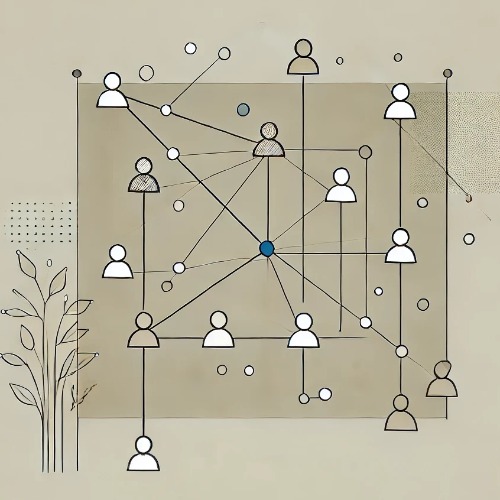
The Gender Performance-Confidence Paradox (GPCP) project investigates how students’ competence, confidence, and classroom participation become misaligned across gender in science learning. Although girls often perform as well as or better than boys in science, they tend to report lower confidence in their abilities, a pattern that is particularly pronounced in Finland. Such differences in confidence may shape how students participate in classroom learning and how they envision their future educational and career pathways in STEM.
The project examines how these differences develop through students’ everyday learning experiences, with particular attention to collaborative science learning. It investigates whether gendered patterns of participation, interaction, and leadership during group work contribute to differences in how students interpret and internalize their competence. By linking students’ performance and motivational beliefs with their actual classroom interactions, the project seeks to identify the social and learning processes through which competence is translated—or fails to be translated—into confidence and active participation.
Methodologically, the project combines longitudinal survey and achievement data with voice-based analysis of authentic classroom interaction. Advanced computational approaches, including automatic speech recognition, natural language processing, social network analysis, and machine learning, are used to examine patterns of participation and interaction in student groups. Through this work, GPCP aims to advance understanding of the cognitive, motivational, and social mechanisms underlying gender differences in STEM learning and to contribute to the development of more effective and equitable learning environments.
Leaders
Doctoral Researchers
Publications
5 items-
Gender Differences In Science Groupwork Participation: Exploring Students’ Voices Using Automatic Speech Recognition and Social Network Analysis
Kang, Jingoo; Adofo, Stephen, 2026, Bruun, Jesper; Kersting, Magdalena, Proceedings of ESERA 2025 – Transitions in Science Education: Sustainability and Digital Advances, 615-623. A4 Conference proceedings -
Gender and STEM career aspiration
Kang, Jingoo, 2022, Tierney, Robert J; Rizvi, Fazal; Ercikan, Kadriye, International Encyclopedia of Education, 344-348. A3 Book section, Chapters in research books -
Gendered Science Practice at Secondary School and its Effects on Science Motivations
Kang, Jingoo, 2022, International journal of science and mathematics education, [Published online: 15 October 2022], 1-23. A1 Journal article (refereed), original research -
Role of Interest and Self-Concept in Predicting Science Aspirations: Gender Study
Kang, J; Keinonen, T; Salonen, A, 2019, Research in science education, [First Online: 26 November 2019], 1-23. A1 Journal article (refereed), original research -
Gender study on the relationships between science interest and future career perspectives
Kang, Jingoo; Hense, Jonathan; Scheersoi, Annette; Keinonen, Tuula, 2018, International journal of science education, 2019; 41, 1, 80-101. A1 Journal article (refereed), original research